
Daily Shea Butter Routine: A Simple Ritual for Healthy, Nourished Skin

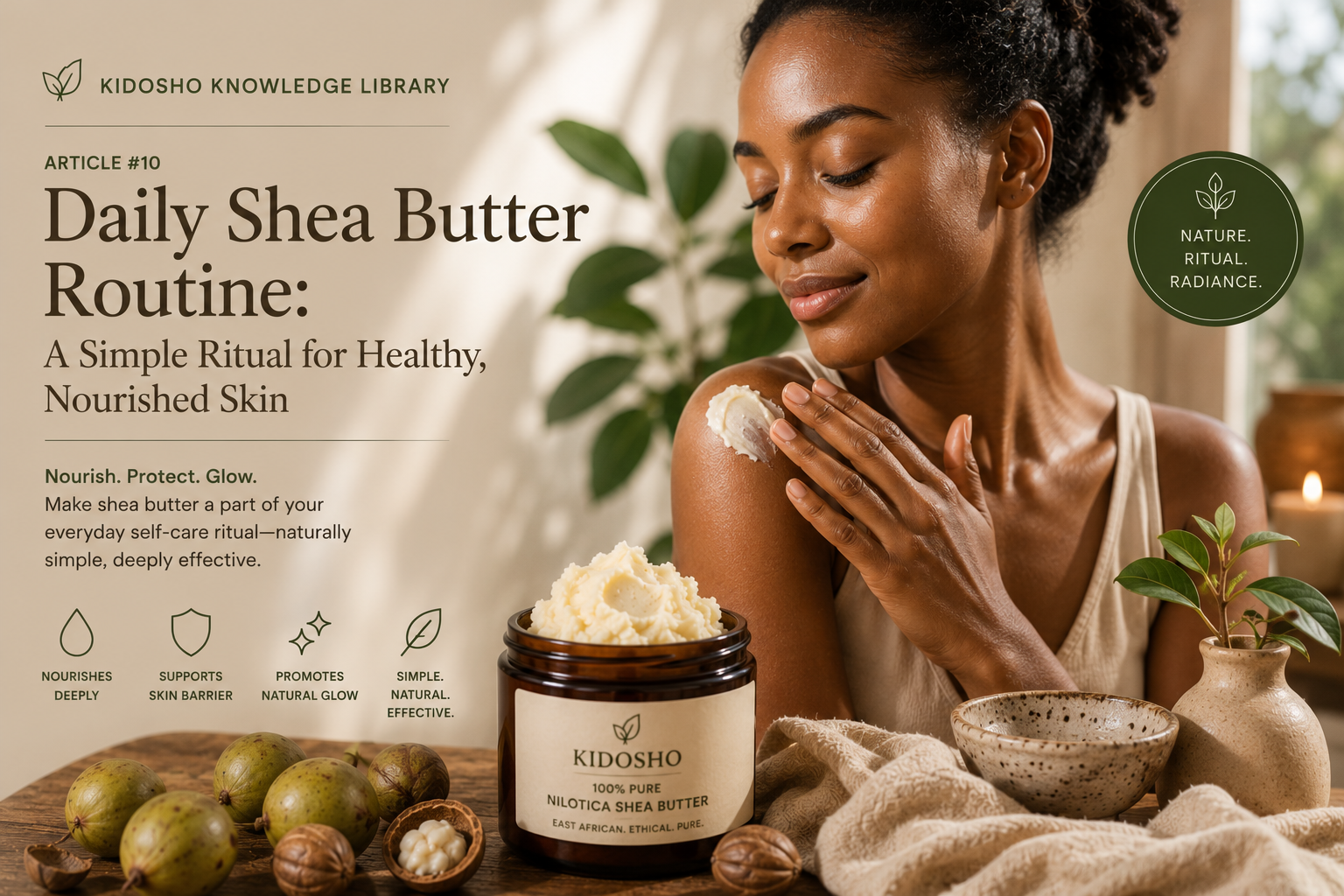
Beautiful Skin Doesn’t Require a Complicated Routine
Modern skincare often feels overwhelming.
Ten-step routines.
Dozens of active ingredients.
Shelves filled with products promising instant results.
Yet healthy skin rarely depends on complexity.
More often, it depends on consistency.
For generations, people across East Africa have relied on pure Shea Butter as an everyday moisturizer, long before elaborate skincare routines became popular.
At KIDOSHO, we believe caring for your skin should feel less like a chore and more like a daily ritual—simple, intentional, and rooted in nature.
In This Article
You’ll learn:
- Why consistency matters more than complexity
- When to apply Shea Butter
- How much to use
- Morning and evening skincare routines
- Seasonal adjustments
- Tips for different parts of the body
Start with Clean Skin
No moisturizer performs at its best if applied over dirt, sunscreen, or makeup.
Begin by gently cleansing your skin using a mild cleanser appropriate for your skin type.
Avoid harsh soaps that strip away your skin’s natural oils.
As discussed in Article #6: How Shea Butter Moisturizes Skin, healthy skin depends on maintaining a strong moisture barrier—not constantly replacing lost oils.
Gentle cleansing helps preserve that barrier.
Apply While Skin Is Slightly Damp
One of the simplest ways to improve any moisturizing routine is timing.
Rather than waiting until your skin feels completely dry, apply Shea Butter shortly after:
- showering
- washing your face
- washing your hands
- bathing
Skin that is still slightly damp retains surface moisture that Shea Butter helps protect by reducing transepidermal water loss (TEWL).
This simple habit can make your moisturizer feel even more effective.
A Little Goes a Long Way
Pure Nilotica Shea Butter is highly concentrated.
You don’t need large amounts.
Start with a small amount about the size of a pea for your face or a fingertip-sized amount for smaller areas of the body.
Warm it between your palms until it softens naturally.
Then massage it gently into your skin using slow, upward motions.
If your skin still feels dry after a few minutes, simply apply a little more.
Building gradually usually works better than applying too much at once.
A Simple Morning Routine
A consistent morning routine helps prepare your skin for the day ahead.
Step 1: Cleanse
Wash your face using a gentle cleanser if needed.
Some people with very dry skin may only need a rinse with lukewarm water in the morning.
Step 2: Apply Shea Butter
Massage a small amount into areas that tend to become dry.
Allow a few minutes for absorption before applying other products.
Step 3: Protect Your Skin
If you’ll be spending time outdoors, finish with a broad-spectrum sunscreen.
While Shea Butter is an excellent moisturizer, it does not provide adequate sun protection and should not replace sunscreen.
An Evening Ritual
Nighttime is an ideal opportunity to replenish your skin after exposure to sun, wind, pollution, and frequent washing.
Step 1: Cleanse Thoroughly
Remove makeup, sunscreen, and daily impurities with a gentle cleanser.
Step 2: Apply Shea Butter
Massage a slightly more generous amount into dry areas.
Many people enjoy using Shea Butter as the final step in their evening skincare routine.
Step 3: Let Nature Do the Rest
While you sleep, your skin continues its natural renewal processes.
Keeping the skin barrier moisturized overnight helps maintain comfort and softness by morning.
Caring for Different Parts of Your Body
Different areas of the body have different moisturizing needs.
Face
Use a small amount and massage gently into the skin.
People with oily or acne-prone skin may prefer applying Shea Butter primarily at night or to areas that feel dry.
Hands
Reapply after washing your hands throughout the day.
Frequent handwashing removes natural oils that help protect the skin barrier.
Elbows and Knees
These high-friction areas often benefit from a slightly thicker application.
Feet
Apply Shea Butter before bed and wear cotton socks overnight if desired.
This can help soften rough heels and dry skin.
Lips
A tiny amount provides a simple, fragrance-free way to protect lips from dryness.
Adjusting Your Routine with the Seasons
Your skin’s needs change throughout the year.
Winter
Cold temperatures, indoor heating, and low humidity often increase dryness.
Many people benefit from applying Shea Butter more frequently during winter months.
Summer
Warmer temperatures may require smaller amounts while still providing moisture after sun exposure or swimming.
Dry Climates
If you live in an area with low humidity, applying Shea Butter immediately after bathing becomes even more important.
Less Really Can Be More
Many skincare routines grow increasingly complicated over time.
Additional serums.
Additional creams.
Additional treatments.
While active ingredients have their place, healthy skin often benefits from a routine that is consistent, gentle, and easy to maintain.
Because KIDOSHO contains only 100% pure Nilotica Shea Butter, it offers:
- one ingredient
- no added fragrance
- no parabens
- no silicones
- no mineral oil
- no unnecessary fillers
Sometimes simplicity is exactly what your skin needs.
Building Healthy Habits
A skincare routine isn’t just about products.
Healthy skin also benefits from:
- drinking enough water
- eating a balanced diet
- protecting skin from excessive sun exposure
- avoiding harsh cleansers
- getting adequate sleep
- managing stress
Shea Butter works best as part of an overall approach to skin health—not as a substitute for healthy habits.
What the Research Says
Dermatology research consistently emphasizes that regular moisturizing is one of the most effective ways to support the skin’s protective barrier and reduce transepidermal water loss (TEWL).¹
Shea Butter functions primarily as an emollient, helping soften rough skin while forming a light protective layer that slows moisture loss. Its naturally occurring fatty acids—including oleic and stearic acids—support skin conditioning and barrier function.²
Studies also identify naturally occurring tocopherols (vitamin E), phytosterols, and triterpenes within Shea Butter’s unsaponifiable fraction. These compounds contribute antioxidant and skin-conditioning properties that make Shea Butter a valued ingredient in cosmetic skincare.³
Although Shea Butter is an excellent moisturizer, it should be used alongside—not in place of—sun protection and other evidence-based skincare practices.
Frequently Asked Questions
When should I apply Shea Butter?
The best time is immediately after bathing, showering, or washing your face, while your skin is still slightly damp.
Can I use Shea Butter twice a day?
Yes.
Many people apply Shea Butter both morning and evening, adjusting the amount based on their skin’s needs.
Should I use Shea Butter before or after sunscreen?
Apply Shea Butter first, allow it to absorb, then apply sunscreen as the final step of your morning skincare routine.
Can I use Shea Butter every day?
Absolutely.
Daily use helps maintain the skin’s moisture barrier and keeps skin feeling soft and comfortable.
How much Shea Butter should I use?
Start with a small amount.
You can always apply more if your skin needs additional moisture.
Key Takeaways
- Consistency is more important than having a complicated skincare routine.
- Apply Shea Butter to clean, slightly damp skin to help retain moisture.
- A small amount is usually enough for most areas of the face and body.
- Adjust your routine based on the season, climate, and your skin’s changing needs.
- KIDOSHO’s 100% pure Nilotica Shea Butter makes it easy to build a simple, effective daily skincare ritual.
Related Articles
Previously in the KIDOSHO Knowledge Library
← Article #4: Benefits of Shea Butter for Dry Skin
← Article #5: Sensitive Skin Guide: Is Shea Butter Right for You?
← Article #6: How Shea Butter Moisturizes Skin
Continue Reading
→ Article #11: Can You Use Shea Butter on Your Face?
You may also enjoy:
- How Shea Butter Moisturizes Skin (Article #6)
- Pure Shea Butter: One Ingredient, Many Benefits (coming soon)
- Benefits of Shea Butter for Dry Skin (Article #4)
- Does Shea Butter Clog Pores? (coming soon)
References
- Elias, P. M. (2005). Stratum Corneum Defensive Functions: An Integrated View. Journal of Investigative Dermatology. This landmark paper explains the importance of the skin barrier and consistent moisturization.
- Zhang, X., et al. (2026). Shea Butter: A Comprehensive Review of Its Compositions, Processing, Applications, and Challenges. Journal of the American Oil Chemists’ Society.
- ScienceDirect Topics. Shea Butter (Vitellaria paradoxa): Composition, Properties and Applications.
- American Academy of Dermatology Association. Guidance on daily moisturizing, gentle skincare routines, and protecting the skin barrier.
About KIDOSHO
At KIDOSHO, we believe that healthy skin doesn’t come from chasing every new trend—it comes from caring for your skin consistently with ingredients you can trust.
That’s why every jar contains 100% pure, ethically sourced Nilotica Shea Butter. No unnecessary additives. No complicated formulas. Just one extraordinary ingredient that has been trusted for generations.
Through the KIDOSHO Knowledge Library, we combine modern skin science with East African tradition to help you build skincare habits that are simple, sustainable, and effective.
Natural is the New Beautiful.