
The Science of Skin Barrier Function: Why Healthy Skin Starts at the Surface

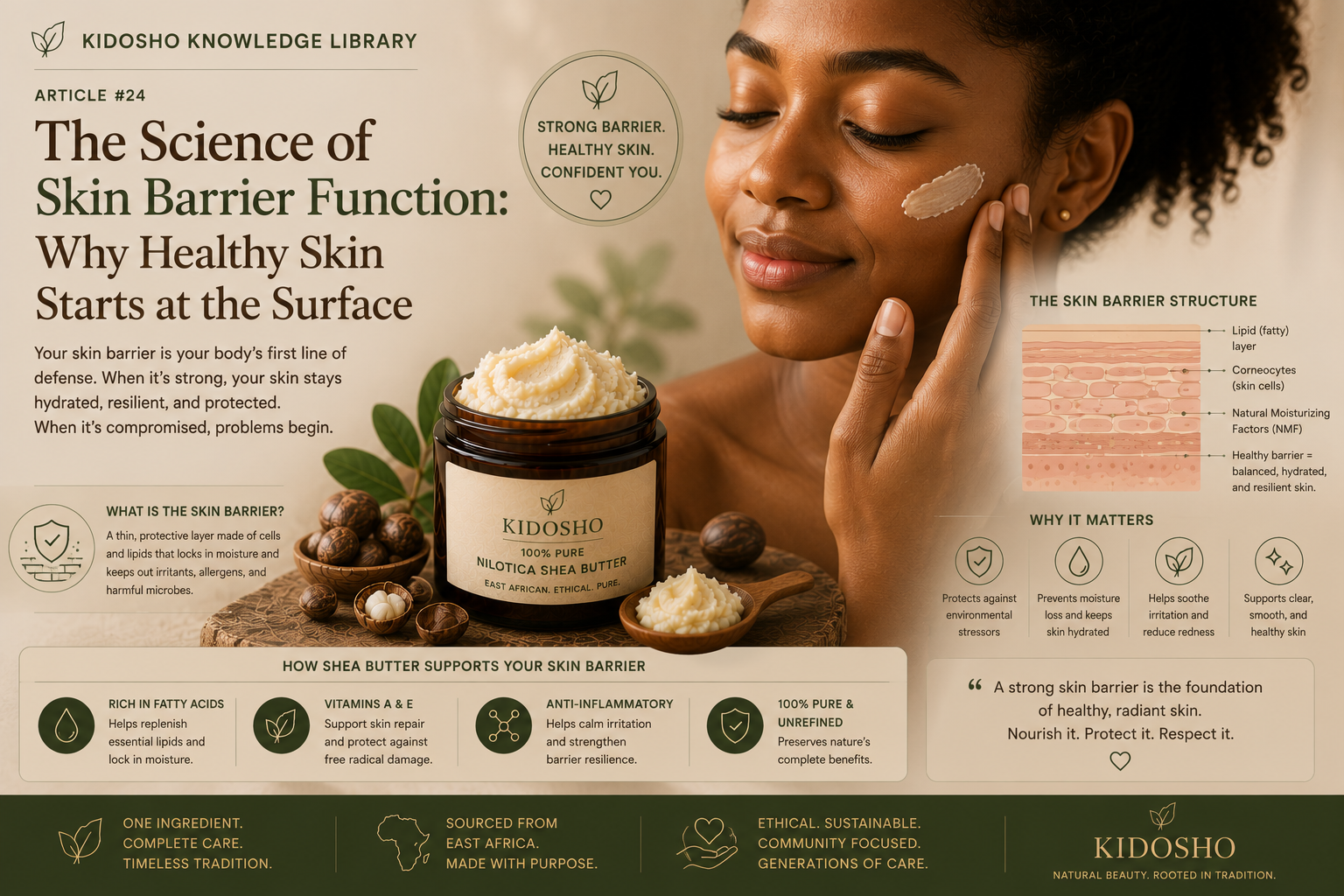
Your Skin’s Most Important Job Isn’t Looking Beautiful—It’s Protecting You
When we think about healthy skin, we often focus on what we can see.
Smoothness.
Glow.
Even tone.
Softness.
But beneath the surface, your skin is performing one of the most important jobs in your body: acting as a protective barrier between you and the outside world.
Every day, this remarkable barrier helps prevent moisture from escaping while shielding you from physical, chemical, and microbial challenges.
When the skin barrier is healthy, skin generally feels soft, comfortable, and resilient.
When it’s compromised, skin may become dry, tight, rough, or more easily irritated.
Understanding how this barrier works helps explain why moisturizing is one of the most fundamental principles of good skincare.
In This Article
You’ll learn:
- What the skin barrier is
- How the barrier protects your body
- What happens when it becomes damaged
- The role of skin lipids
- How moisturizers support barrier function
- Why Nilotica Shea Butter complements healthy skin
- What scientific research says
What Is the Skin Barrier?
The skin barrier is the outermost protective layer of your skin.
More specifically, it refers to the stratum corneum, the outer layer of the epidermis.
Although extremely thin, this layer performs an enormous task:
It helps keep the good things in—and the harmful things out.
A healthy skin barrier:
- reduces water loss
- helps prevent entry of irritants
- limits exposure to microorganisms
- protects against environmental stressors
- contributes to smooth, comfortable skin
Without this barrier, life on land would be impossible.
A Brick-and-Mortar Design
Dermatologists often describe the skin barrier using a simple analogy.
Imagine a brick wall.
The skin cells (corneocytes) are the bricks.
The lipids surrounding them are the mortar.
Together they create a flexible yet remarkably effective protective wall.
If either the bricks or the mortar become damaged, tiny gaps appear.
These gaps allow moisture to escape more easily while making it easier for external irritants to penetrate the skin.
The Lipids That Hold Everything Together
The “mortar” surrounding skin cells is composed primarily of three classes of lipids:
- ceramides
- cholesterol
- free fatty acids
Together, these lipids organize into highly ordered layers that reduce water loss while maintaining flexibility.
Although Shea Butter does not replace these naturally occurring skin lipids directly, its rich content of fatty acids helps soften the skin surface and reduce moisture loss by forming a protective emollient layer.
What Is Transepidermal Water Loss (TEWL)?
One of the most important measurements in skin science is transepidermal water loss (TEWL).
TEWL refers to the gradual movement of water from inside the body through the skin and into the surrounding air.
A small amount of water loss is completely normal.
Problems arise when the skin barrier becomes compromised and water escapes faster than the skin can replace it.
Higher TEWL is commonly associated with:
- dry skin
- rough texture
- tightness
- flaking
- increased sensitivity
One goal of moisturizing is to help reduce excessive water loss and support barrier function.
What Damages the Skin Barrier?
Your skin barrier faces constant challenges.
Common stressors include:
Environmental Factors
- cold weather
- low humidity
- excessive sun exposure
- wind
Daily Habits
- frequent hot showers
- over-cleansing
- harsh soaps
- excessive exfoliation
Personal Factors
- aging
- certain skin conditions
- genetic differences
- repeated friction
Even healthy skin experiences temporary barrier disruption from time to time.
Signs Your Skin Barrier May Need Support
When the barrier isn’t functioning optimally, you may notice:
- dryness
- tightness after washing
- rough patches
- increased sensitivity
- flaking
- dull appearance
- occasional itching
These symptoms don’t necessarily indicate a medical condition, but they often suggest that the skin could benefit from gentler care and improved moisturization.
Persistent or severe symptoms should be evaluated by a healthcare professional.
How Moisturizers Support the Skin Barrier
Moisturizers work in several complementary ways.
They may contain:
Emollients
These smooth and soften the skin surface.
Shea Butter is an excellent natural emollient.
Occlusive Ingredients
These form a protective layer that helps slow water evaporation.
Shea Butter also provides mild occlusive properties while maintaining a comfortable, breathable feel.
Humectants
These attract water into the outer layers of the skin.
Many moisturizers combine humectants with emollients and occlusive ingredients for balanced hydration.
Pure Shea Butter naturally functions primarily as an emollient with some occlusive characteristics.
Why Nilotica Shea Butter Supports Healthy-Looking Skin
As we’ve explored throughout the KIDOSHO Knowledge Library, Nilotica Shea Butter is naturally rich in:
- oleic acid
- stearic acid
- linoleic acid
- palmitic acid
These fatty acids contribute to its smooth texture and skin-conditioning properties.
Its naturally higher oleic acid content also gives East African Nilotica Shea Butter its signature creamy consistency, making it easy to spread without feeling overly waxy.
Rather than changing how your skin works, Shea Butter helps support the skin’s natural barrier by improving surface hydration and reducing excessive moisture loss.
Healthy Habits That Protect Your Skin Barrier
Supporting your skin barrier doesn’t require complicated routines.
Simple habits often make the biggest difference.
Consider:
- moisturizing after bathing
- avoiding excessively hot water
- using gentle cleansers
- limiting unnecessary exfoliation
- protecting your skin from excessive sun exposure
- drinking adequate fluids for overall health
- choosing moisturizers appropriate for your skin type
Consistency matters more than complexity.
Why KIDOSHO Focuses on Barrier Support
At KIDOSHO, our philosophy is simple.
Healthy-looking skin begins with supporting what your body already does naturally.
Rather than overwhelming the skin with unnecessary ingredients, our 100% pure East African Nilotica Shea Butter complements your skin’s own protective barrier through naturally occurring fatty acids that help soften skin and reduce moisture loss.
Sometimes skincare works best by supporting nature rather than replacing it.
What the Research Says
The stratum corneum serves as the body’s primary permeability barrier. Its structure—often described as a “brick-and-mortar” system of corneocytes surrounded by lipid layers—is essential for maintaining hydration and protecting against environmental challenges.¹
Scientific research has identified ceramides, cholesterol, and free fatty acids as the principal lipids responsible for maintaining normal barrier function. When these lipid layers become disrupted, transepidermal water loss (TEWL) increases, leading to dry, rough, and more easily irritated skin.²
Plant-derived emollients, including Shea Butter, help condition the skin surface and reduce moisture loss by forming a protective layer over the skin. Although they do not replace the skin’s native lipids, they play an important role in supporting barrier function through regular moisturization.³
Dermatology guidelines consistently recommend routine moisturization as a cornerstone of maintaining healthy skin barrier function, particularly in dry environments or after cleansing.⁴
Frequently Asked Questions
What is the skin barrier?
The skin barrier is the outermost layer of the skin that helps retain moisture while protecting against environmental irritants and microorganisms.
What causes skin barrier damage?
Common causes include harsh cleansers, excessive washing, hot water, dry climates, sun exposure, aging, and certain skin conditions.
Does Shea Butter repair the skin barrier?
Shea Butter helps support the skin barrier by moisturizing the skin and reducing excessive water loss. It should not be described as permanently repairing or rebuilding the barrier.
What is TEWL?
TEWL stands for transepidermal water loss, the natural movement of water through the skin into the surrounding environment. Excessive TEWL is associated with impaired barrier function and dry skin.
Why is moisturizing important?
Regular moisturization helps maintain skin comfort, reduces excessive water loss, and supports the skin’s natural protective barrier.
Key Takeaways
- The skin barrier protects your body while helping retain essential moisture.
- The outer stratum corneum functions like a brick wall made of skin cells and lipids.
- Excessive transepidermal water loss contributes to dry, uncomfortable skin.
- Regular moisturization helps support healthy barrier function.
- Pure Nilotica Shea Butter acts primarily as an emollient with mild occlusive properties, helping soften skin and reduce moisture loss.
- Healthy-looking skin begins with protecting and supporting the barrier you already have.
Related Articles
Previously in the KIDOSHO Knowledge Library
← Article #4: Benefits of Shea Butter for Dry Skin
← Article #5: Sensitive Skin Guide: Is Shea Butter Right for You?
← Article #6: How Shea Butter Moisturizes Skin
← Article #13: Understanding Vitamins A & E
← Article #14: Essential Fatty Acids Explained
← Article #19: What Makes Pure Shea Butter Unique?
You may also enjoy:
- What Is Nilotica Shea Butter? (Article #1)
- Why Nilotica Shea Butter Is Different (Article #2)
- Daily Shea Butter Routine (Article #10)
- Face vs. Body: Can You Use Shea Butter Everywhere? (Article #15)
Continue Reading
→ Article #25: Understanding TEWL: Why Your Skin Loses Moisture
References
- Elias, P. M. (2012). Structure and Function of the Stratum Corneum Permeability Barrier. Journal of Investigative Dermatology.
- Proksch, E., Brandner, J. M., & Jensen, J. M. (2008). The Skin: An Indispensable Barrier. Experimental Dermatology.
- Lin, T.-K., Zhong, L., & Santiago, J. L. (2018). Anti-Inflammatory and Skin Barrier Repair Effects of Topical Application of Some Plant Oils. International Journal of Molecular Sciences.
- Madison, K. C. (2003). Barrier Function of the Skin: “La Raison d’Être” of the Epidermis. Journal of Investigative Dermatology.
- Zhang, X., et al. (2026). Shea Butter: A Comprehensive Review of Its Compositions, Processing, Applications, and Challenges. Journal of the American Oil Chemists’ Society.
About KIDOSHO
At KIDOSHO, we believe healthy skin begins by respecting its natural design.
Our 100% pure, ethically sourced East African Nilotica Shea Butter is carefully selected to complement the skin’s natural moisture barrier through its rich blend of naturally occurring fatty acids. By keeping our ingredient list intentionally simple, we focus on supporting your skin—not overwhelming it—while honoring generations of East African botanical knowledge and the best of modern skin science.
Through the KIDOSHO Knowledge Library, we aim to make skincare science understandable, empowering you to care for your skin with confidence, curiosity, and simplicity.
Natural is the New Beautiful.