
Shea Butter During Pregnancy: Is It Safe to Use?

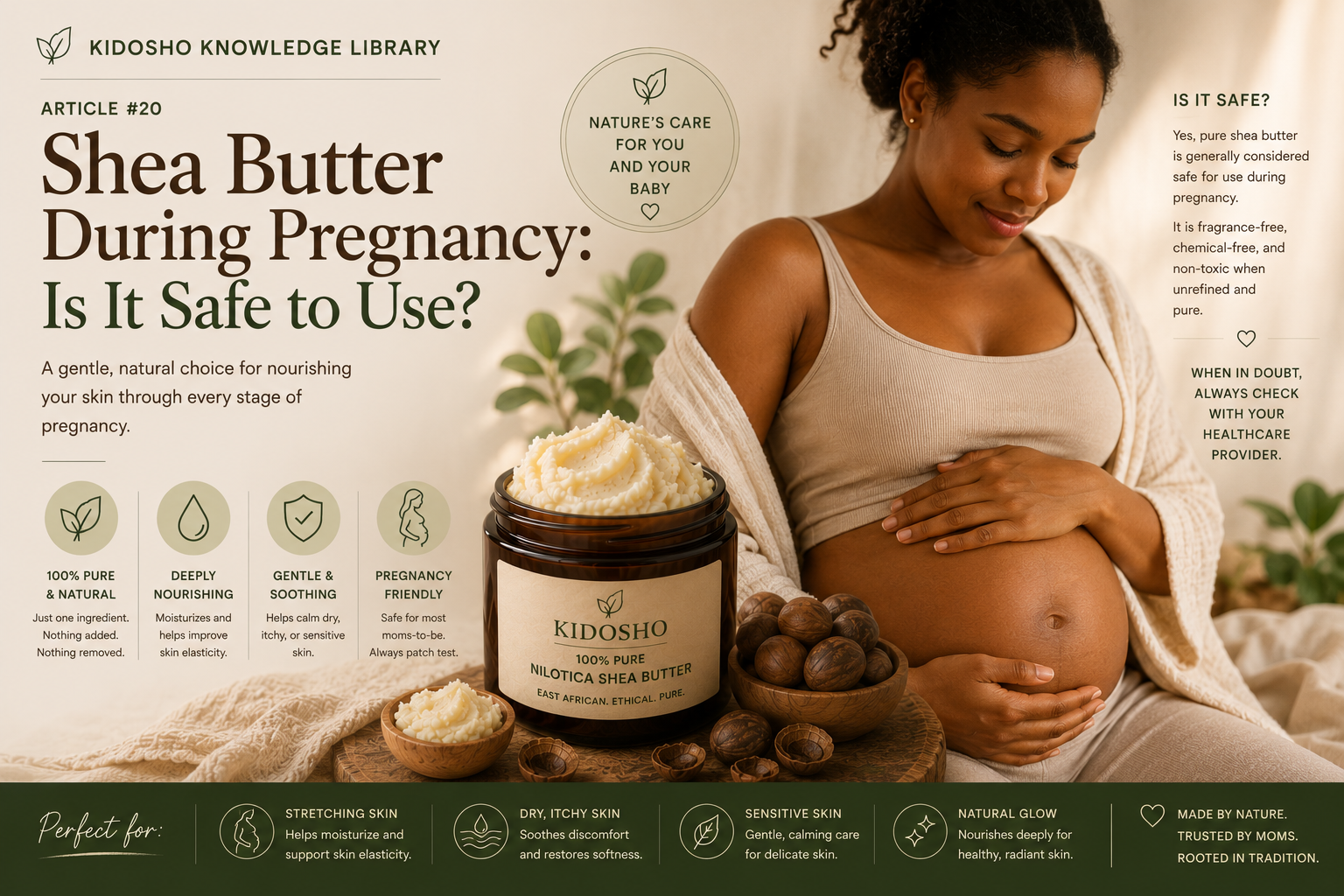
Caring for Skin Through Every Stage of Pregnancy
Pregnancy is a remarkable journey of change.
As your body grows to support new life, your skin changes too. Many expectant mothers experience dryness, tightness, itching, and increased sensitivity—particularly across the abdomen, breasts, hips, and thighs.
Choosing skincare products during pregnancy often comes with an extra layer of consideration. Many people look for products with simple ingredient lists and minimal additives.
That’s one reason 100% pure Nilotica Shea Butter has been a trusted skincare staple in many cultures for generations.
At KIDOSHO, we believe that informed choices begin with accurate information. This article explores what current evidence says about using pure Shea Butter during pregnancy—and where its benefits and limitations begin.
In This Article
You’ll learn:
- Whether Shea Butter is considered safe during pregnancy
- How pregnancy affects the skin
- How Shea Butter may help with dryness and comfort
- What it can—and cannot—do for stretch marks
- Tips for safe use
- What scientific research says
How Pregnancy Changes the Skin
During pregnancy, hormonal changes and the body’s rapid expansion affect the skin in many ways.
Common changes include:
- dry skin
- tight or stretching skin
- itching
- increased sensitivity
- changes in skin pigmentation
- visible stretch marks (striae gravidarum)
These changes are normal and vary from person to person.
The abdomen is often the first area to feel tight, but the breasts, hips, thighs, and lower back may also be affected.
Is Pure Shea Butter Safe During Pregnancy?
For most people, topical application of pure Shea Butter is generally considered safe during pregnancy when used as a cosmetic moisturizer.
Because 100% pure Nilotica Shea Butter contains a single naturally derived ingredient and is applied to the skin rather than ingested, it is widely used as part of pregnancy skincare routines.
However, every pregnancy is unique.
If you have:
- a high-risk pregnancy
- known allergies
- eczema or other skin conditions
- concerns about any skincare product
it’s always appropriate to discuss your skincare routine with your obstetrician, midwife, or dermatologist.
Why Many Expectant Mothers Choose Shea Butter
Pregnancy often increases the skin’s need for moisture.
As we’ve discussed throughout the KIDOSHO Knowledge Library, Shea Butter is naturally rich in fatty acids that help support the skin’s moisture barrier.
Its emollient properties help:
- soften dry skin
- improve skin comfort
- reduce moisture loss
- support skin barrier function
- leave the skin feeling smooth and nourished
These benefits can be especially welcome as the skin stretches throughout pregnancy.
Can Shea Butter Prevent Stretch Marks?
This is one of the most common questions about pregnancy skincare.
The honest answer is:
There is no strong scientific evidence that Shea Butter can reliably prevent stretch marks.
Stretch marks develop because of a combination of factors, including:
- genetics
- hormonal influences
- skin elasticity
- rate of weight gain
- fetal growth
No topical moisturizer—including Shea Butter—has been conclusively proven to prevent them.
However, keeping the skin well moisturized may help improve comfort by reducing dryness and tightness.
Many women also find that regular moisturizing helps their skin feel softer and more supple throughout pregnancy.
At KIDOSHO, we believe it’s important to distinguish between realistic cosmetic benefits and unsupported promises.
Where to Apply Shea Butter During Pregnancy
Many expectant mothers choose to apply Shea Butter to areas experiencing the greatest stretching, including:
- abdomen
- breasts (avoiding the nipples immediately before breastfeeding unless cleaned as recommended by a healthcare professional)
- hips
- thighs
- lower back
- hands
- elbows
- feet
These areas often benefit from regular moisturization as the skin adapts to physical changes.
A Simple Pregnancy Skincare Routine
Morning
After bathing, apply a small amount of Shea Butter to slightly damp skin.
Massage gently into areas prone to dryness.
Evening
Reapply before bed, paying extra attention to areas that feel tight or itchy.
Gentle massage may also become a relaxing part of your evening routine.
Stay Consistent
Daily moisturizing is generally more beneficial than occasional heavy application.
As we discussed in Article #10: Daily Shea Butter Routine, consistency is one of the keys to maintaining healthy, comfortable skin.
Choosing Products During Pregnancy
Pregnancy often encourages people to simplify their routines.
Many expectant mothers look for products with:
- short ingredient lists
- minimal fragrances
- no unnecessary dyes
- fewer synthetic additives
KIDOSHO’s 100% pure Nilotica Shea Butter contains one ingredient only.
For those seeking a minimalist moisturizer, that simplicity can be reassuring.
A Patch Test Is Still a Good Idea
Even natural ingredients can cause irritation in some individuals.
Before using any new skincare product:
- apply a small amount to the inside of your forearm
- wait 24 hours
- monitor for redness, itching, or irritation
Pregnancy can temporarily change skin sensitivity, making patch testing a sensible precaution.
What Shea Butter Doesn’t Do
We believe honesty builds trust.
Pure Shea Butter is not:
- a guaranteed stretch mark prevention treatment
- a treatment for pregnancy-related skin conditions
- a replacement for medical care
- a substitute for sunscreen
Its primary role is to moisturize and condition the skin while supporting the skin’s natural moisture barrier.
Why KIDOSHO Chooses Pure Nilotica Shea Butter
During pregnancy, many people prefer simplicity.
That’s why every jar of KIDOSHO contains only 100% pure, ethically sourced East African Nilotica Shea Butter.
Its naturally creamy texture spreads easily across stretching skin, while its rich blend of naturally occurring fatty acids helps support everyday moisturization—without added fragrances, fillers, or unnecessary ingredients.
What the Research Says
Scientific reviews recognize Shea Butter as an effective emollient that helps moisturize the skin and support the skin’s natural barrier by reducing transepidermal water loss (TEWL). These properties make it a useful cosmetic moisturizer for dry skin, including during periods of increased skin stretching.¹
Research on pregnancy skincare has not demonstrated that Shea Butter or other topical moisturizers can reliably prevent stretch marks (striae gravidarum). Current evidence suggests that genetics, hormonal changes, and skin biomechanics play much larger roles in their development.²
Healthcare organizations generally encourage pregnant individuals to choose skincare products thoughtfully and to discuss any concerns with their prenatal care provider, particularly if they have underlying medical conditions or questions about specific ingredients.³
Frequently Asked Questions
Is Shea Butter safe during pregnancy?
For most people, topical use of 100% pure Shea Butter is generally considered safe as a cosmetic moisturizer during pregnancy. If you have questions about your specific situation, consult your healthcare provider.
Can Shea Butter prevent stretch marks?
There is no strong scientific evidence that Shea Butter can reliably prevent stretch marks. It may, however, help keep the skin moisturized and improve comfort as the skin stretches.
Can I use Shea Butter every day while pregnant?
Yes.
Many people apply Shea Butter once or twice daily to areas prone to dryness or tightness.
Is fragrance-free Shea Butter better during pregnancy?
Many expectant mothers prefer products without added fragrances because pregnancy can temporarily increase skin sensitivity. KIDOSHO contains no added fragrance.
Should I stop using Shea Butter before delivery?
No evidence suggests that healthy individuals need to discontinue using pure Shea Butter as a cosmetic moisturizer before delivery. If you plan to apply it to the breast area and are breastfeeding, follow your healthcare provider’s guidance regarding cleansing before nursing.
Key Takeaways
- Pregnancy commonly causes dry, tight, and stretching skin.
- Pure Shea Butter is generally considered safe for topical cosmetic use during pregnancy for most individuals.
- Shea Butter helps moisturize and support the skin’s natural moisture barrier.
- Scientific evidence does not support claims that Shea Butter reliably prevents stretch marks.
- Daily moisturizing and simple skincare routines can help improve skin comfort throughout pregnancy.
- KIDOSHO’s 100% pure East African Nilotica Shea Butter offers a minimalist approach to pregnancy skincare.
Related Articles
Previously in the KIDOSHO Knowledge Library
← Article #4: Benefits of Shea Butter for Dry Skin
← Article #5: Sensitive Skin Guide: Is Shea Butter Right for You?
← Article #6: How Shea Butter Moisturizes Skin
← Article #10: Daily Shea Butter Routine
← Article #13: Understanding Vitamins A & E
← Article #19: What Makes Pure Shea Butter Unique?
You may also enjoy:
- Face vs. Body: Can You Use Shea Butter Everywhere? (Article #15)
- Essential Fatty Acids Explained (Article #14)
- What Is Nilotica Shea Butter? (Article #1)
- From Tree to Jar (Article #3)
Continue Reading
→ Article #21: Shea Butter for Babies: Gentle Care for Delicate Skin
References
- Lin, T.-K., Zhong, L., & Santiago, J. L. (2018). Anti-Inflammatory and Skin Barrier Repair Effects of Topical Application of Some Plant Oils. International Journal of Molecular Sciences.
- Korgavkar, K., Wang, F., & Feldman, S. R. (2015). Prevention of Striae Gravidarum: A Review of Topical Therapies. International Journal of Women’s Dermatology. This review concluded that evidence for topical products preventing stretch marks remains limited and inconclusive.
- American College of Obstetricians and Gynecologists (ACOG). Patient guidance on skin changes during pregnancy and discussing medications and skincare products with healthcare providers.
- Zhang, X., et al. (2026). Shea Butter: A Comprehensive Review of Its Compositions, Processing, Applications, and Challenges. Journal of the American Oil Chemists’ Society.
About KIDOSHO
At KIDOSHO, we understand that pregnancy is a time when many people seek products they can trust.
Our 100% pure, ethically sourced East African Nilotica Shea Butter contains one carefully selected ingredient—nothing more. Its naturally creamy texture and rich fatty acid profile help moisturize and comfort dry, stretching skin while honoring the simplicity many families value during this special season of life.
Through the KIDOSHO Knowledge Library, we provide evidence-based education that empowers you to make informed skincare choices with confidence.
Natural is the New Beautiful.