
What is Nilotica Shea Butter?

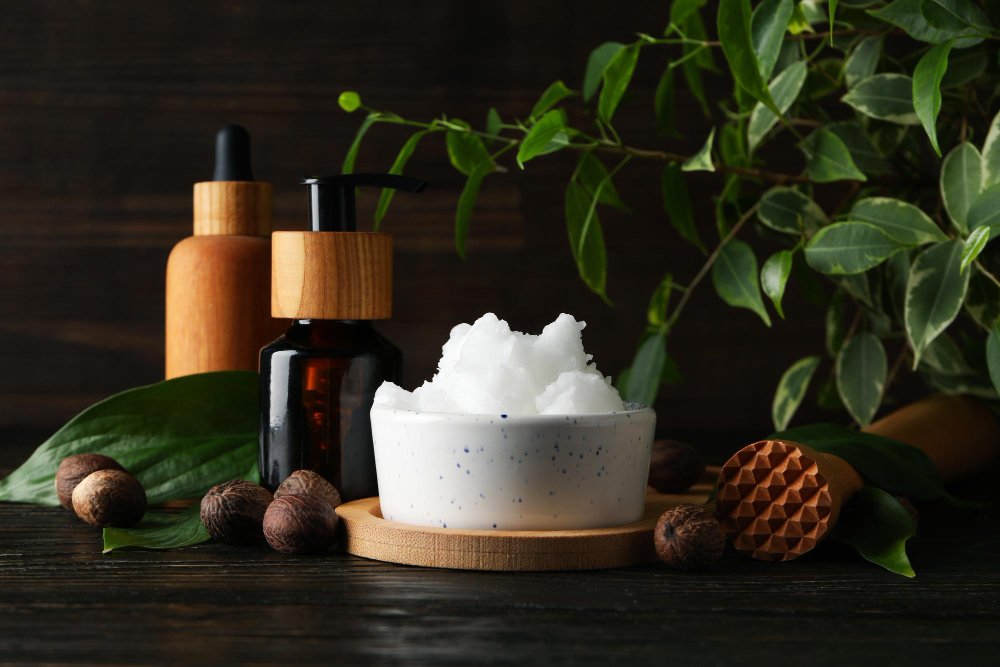
What Is Nilotica Shea Butter?
Nature’s Rare Gift from East Africa
When people hear the words Shea Butter, they usually think of a rich moisturizer for dry skin. What many don’t realize is that there are two primary subspecies of the African shea tree, each producing butter with distinct characteristics.
One of the rarest is Nilotica Shea Butter, produced from Vitellaria paradoxa subsp. nilotica. Native to East Africa, this variety is naturally softer, creamier, and higher in oleic acid than the more widely available West African shea butter. These characteristics contribute to its smooth texture and elegant, fast-absorbing feel, which have made it increasingly popular in premium skincare formulations.
For generations, families across Uganda and South Sudan have relied on Nilotica Shea Butter as part of their daily skin and hair care traditions. Today, it remains one of nature’s most valued botanical ingredients.
At KIDOSHO, this remarkable butter is more than our primary ingredient—it’s the foundation of our philosophy that nature, when respected and carefully preserved, provides extraordinary care.
In This Article
You’ll learn:
- What Nilotica Shea Butter is
- Where it comes from
- How it differs from traditional shea butter
- Why it’s valued in skincare
- What scientific research tells us
- How to use it for everyday skin and hair care
What Is Nilotica Shea Butter?
Nilotica Shea Butter is a natural vegetable butter extracted from the nuts of the Nilotica Shea tree, a subspecies of the African shea tree.
Scientific Name
Vitellaria paradoxa subsp. nilotica
Unlike many cosmetic ingredients that require extensive chemical processing, pure shea butter is obtained through mechanical and traditional processing methods that separate the natural oils from the kernel. When minimally processed, it retains its characteristic fatty acid profile along with naturally occurring bioactive compounds such as tocopherols (vitamin E), phytosterols, and triterpenes. These compounds have been studied for their roles in skin conditioning and antioxidant activity.¹
Pure Nilotica Shea Butter contains only one ingredient.
Nothing added.
Nothing removed.
Just nature.
Where Does Nilotica Shea Butter Come From?
The Nilotica Shea tree grows naturally across a relatively small region of East Africa.
Its natural range includes parts of:
- Uganda
- South Sudan
- Northern Uganda
- Northwestern Kenya (localized populations)
- Ethiopia (limited distribution)
Unlike many commercial crops, shea trees grow wild rather than in plantations. They depend on natural ecosystems and mature slowly.
A young tree may take around 20 years before producing a meaningful harvest, while mature trees can continue producing fruit for many decades. Because of this slow growth and limited geographic range, Nilotica Shea Butter is produced in much smaller quantities than the West African variety.
From Fruit to Butter
Each year, mature shea trees produce plum-like fruit.
Inside every fruit is a single nut containing the kernel from which shea butter is made.
Traditional processing typically involves:
- Collecting naturally fallen fruit
- Removing the pulp
- Drying the nuts
- Cracking the shells
- Roasting or gently heating the kernels
- Grinding the kernels into a paste
- Kneading to release the natural oils
- Filtering and cooling the butter
These time-honored methods help preserve the butter’s natural composition while supporting local knowledge and livelihoods.
What Makes Nilotica Shea Butter Different?
Although both major shea subspecies come from closely related trees, they differ in their natural fatty acid composition.
Nilotica Shea Butter generally contains:
- a higher proportion of oleic acid
- a lower proportion of stearic acid
This balance contributes to several characteristics many users appreciate:
Naturally Creamy
Its texture is noticeably softer than many West African shea butters.
Quick Absorption
Many people find that it melts rapidly into the skin without leaving a heavy residue.
Elegant Skin Feel
The higher oleic acid content contributes to a smooth, lightweight application that works well in both skin and hair care products.²
Naturally Rich in Beneficial Lipids
Nilotica Shea Butter contains naturally occurring fatty acids, including:
- Oleic Acid
- Stearic Acid
- Linoleic Acid
- Palmitic Acid
These lipids function as emollients, softening the skin and supporting its natural moisture barrier by reducing transepidermal water loss. This is one reason shea butter is widely used in products designed for dry skin.³
Naturally Occurring Vitamins and Plant Compounds
Pure Nilotica Shea Butter also contains naturally occurring:
- Tocopherols (Vitamin E)
- Plant sterols
- Triterpenes
- Other unsaponifiable compounds
These naturally occurring compounds have been studied for their antioxidant properties and their contribution to skin conditioning. Their presence is one reason minimally processed shea butter remains highly valued in cosmetic science.¹
What the Research Says
Modern research has helped explain why shea butter has remained an important skincare ingredient across generations.
Studies consistently report that shea butter contains a unique combination of fatty acids and naturally occurring bioactive compounds that contribute to moisturization, skin conditioning, and skin barrier protection.¹
Researchers have also documented compositional differences between the two principal shea subspecies. Compared with West African shea, East African Nilotica Shea generally contains a higher proportion of oleic acid, resulting in a softer texture and lower melting point.²
Dermatology literature further describes shea butter as an effective emollient that helps reduce water loss from the skin by reinforcing the skin’s natural barrier. While widely used for dry skin, it should not be considered a medical treatment for skin diseases.³
Everyday Uses
People use pure Nilotica Shea Butter in many ways:
- Daily facial moisturizer
- Dry hands
- Elbows and knees
- Body moisturizer
- Lip conditioning
- Hair moisturizer
- Beard conditioning
- Dry scalp care
- Massage butter
Because it contains no added fragrance or water, many people appreciate its simplicity as part of their daily routine.
Why KIDOSHO Chose Nilotica Shea Butter
Our inspiration began in East Africa, where generations have trusted this remarkable butter for everyday care.
We chose Nilotica Shea Butter because it reflects the values that define KIDOSHO:
- Purity over complexity
- Tradition alongside modern understanding
- Ethical sourcing that supports women-led communities
- Respect for nature’s craftsmanship
- Exceptional quality through simplicity
Rather than building products around long ingredient lists, we chose to let one extraordinary ingredient take center stage.
Frequently Asked Questions
Is Nilotica Shea Butter the same as regular shea butter?
No. Nilotica Shea Butter comes from Vitellaria paradoxa subsp. nilotica, while most commercial shea butter comes from Vitellaria paradoxa subsp. paradoxa. They differ in geographic origin and fatty acid composition.
Why is Nilotica Shea Butter softer?
Its naturally higher oleic acid content contributes to a creamier texture and lower melting point compared with many West African shea butters.²
Does pure shea butter contain preservatives?
No. Pure anhydrous (water-free) shea butter generally does not require preservatives because microorganisms require water to grow. Proper storage is still important for maintaining product quality.
Can it be used every day?
Yes. Many people include pure shea butter in their daily skincare or haircare routine. Individual needs vary, so use the amount that feels comfortable for your skin and hair.
Key Takeaways
- Nilotica Shea Butter is a rare East African variety of shea butter.
- It comes from Vitellaria paradoxa subsp. nilotica.
- Its naturally high oleic acid content contributes to a soft, creamy texture.
- It contains naturally occurring fatty acids, tocopherols, phytosterols, and triterpenes.
- Scientific literature supports its role as an effective emollient that helps support the skin’s moisture barrier.
- KIDOSHO uses 100% pure Nilotica Shea Butter to honor the traditions, craftsmanship, and communities behind this remarkable ingredient.
Continue Your Journey
Continue exploring the KIDOSHO Journal:
- Why Nilotica Shea Butter Is Different
- From Tree to Jar: The Journey of Pure Shea Butter
- How Nilotica Shea Is Harvested
- The Nilotica Shea Tree
- How Shea Butter Moisturizes Skin
- Understanding Vitamins A & E in Shea Butter
About KIDOSHO
Every jar of KIDOSHO begins with one extraordinary ingredient: 100% pure Nilotica Shea Butter, ethically sourced from East Africa and carefully prepared to preserve its natural richness.
We believe the best skincare starts with ingredients that don’t need to be reinvented—only respected.
Natural is the New Beautiful.
Scientific References
- Zhang, X., et al. (2026). Shea Butter: A Comprehensive Review of Its Compositions, Processing, Applications, and Challenges. Journal of the American Oil Chemists’ Society.
- ScienceDirect Topics. Shea Butter (Vitellaria paradoxa): Composition, Properties and Applications.
- Baumann, L. Shea Butter. Dermatology News (review of cosmetic and dermatologic properties).
- Maranz, S., & Wiesman, Z. Influence of Climate on the Tocopherol Content of Shea Butter. Journal of Agricultural and Food Chemistry.
Editorial note: For publication, format these references according to your preferred citation style (APA, Chicago, etc.) and link them to the original journal pages. This strengthens transparency and supports KIDOSHO’s goal of providing evidence-informed educational content while keeping marketing claims appropriately grounded.